
Summary: You can keep your customers satisfied with your products when you maintain warehouse safety. Adequate measures for maintaining the efficiency and security of your warehouse help enhance your overall business’s reputation. You can keep your employees safe and happy, increasing their overall productivity. When you learn about safety tips, causes, and preventive measures, you can ensure a high-quality environment in your warehouses. It also keeps your products and equipment safe.
________________________________________________________________________________________________________________
Essential Warehouse Safety Guidelines Every Business Should Follow
Warehouse Managers | Forklift Operator | Equipment Maintenance
Amazon sellers choose prep centres for their advanced warehouse safety and professionalism. Warehouses are havoc experiencing spaces. You can see all employees running to complete one task or another. They have to handle heavy machines and equipment. They manage products and their safety all day. This equipment functions at high speed and creates dangerous environments for the employees.
Many businesses and sellers choose Amazon FBM services to simplify their operations. But without proper training and safety knowledge, incidents can happen in the warehouse. To prevent such casualties, learning about safety procedures, tips, training, and checklists is highly beneficial. Investing in your warehouse security can prove effective in the long-term with hassle-free procedures.
Why is Warehouse Health and Safety Training Important?
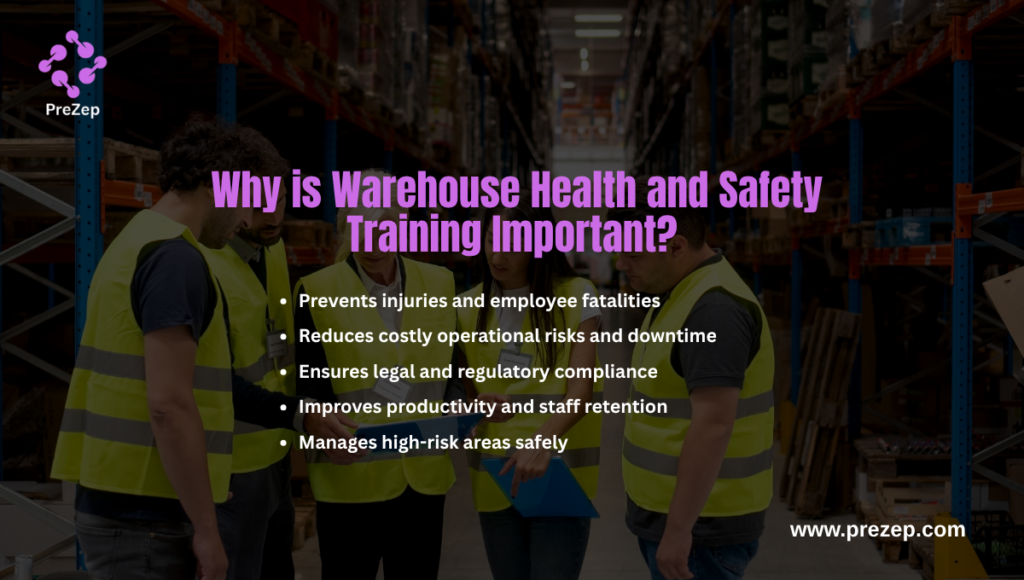
Warehouse health and safety regulations are necessary for several reasons.
-
Employees Safety
Warehouses are dangerous spaces with constantly moving machinery, forklifts, and heavy, high-stacked inventory. Following a comprehensive warehouse health and safety policy helps avoid injuries. It can happen because of falling objects, collisions, and in some severe cases, death.
-
Reducing Operational Risk
Accidents and unsafe conditions can lead to expensive downtime and delays. It can happen due to a cracked floor, damaged rack, or hazardous substances. Paying attention to the source of the damage can help find suitable solutions.
-
Legal and Regulatory Compliance
Businesses, prep centres, and 3PL providers must follow strict workplace regulations. If they fail to maintain proper warehouse safety, it can result in dire situations. They have to face hefty fines, legal actions, and potential shutdowns.
-
Improved Productivity
When you maintain a safe and clean work environment, it helps reduce accidents and enhance staff retention. When workers feel safe in their work environment, they feel more productive. Their chances of leaving their jobs also decrease.
-
Managing High-Risk Areas
Your employees must wear personal protective equipment while managing high-risk areas. Following specialised protocols in such areas is necessary. Otherwise, improper storage can lead to fire incidents, and hazardous materials management and improper ventilation can cause risky situations. Following safety measures helps maintain a healthy and secure environment.
What are the Warehouse Safety Issues?
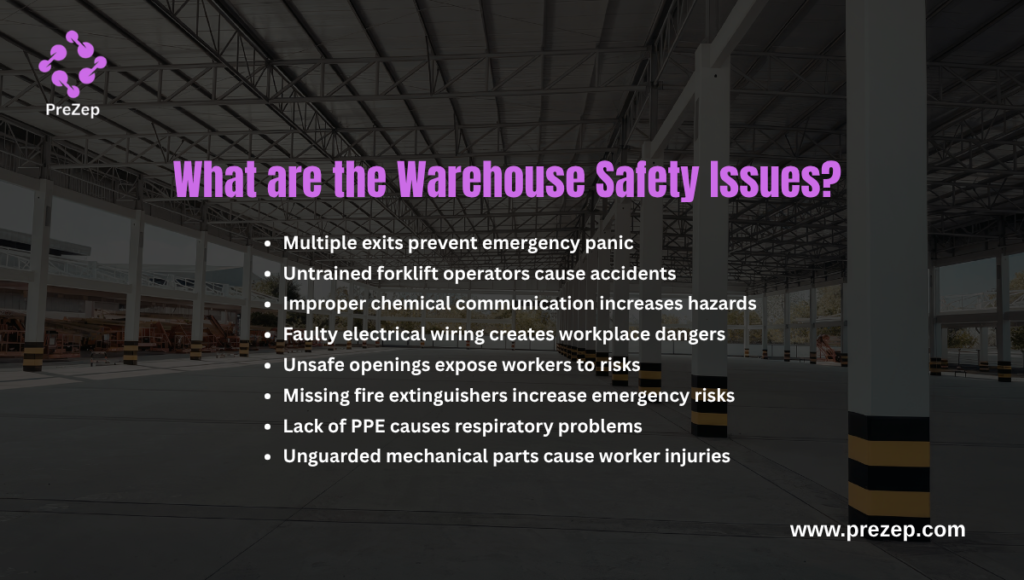
There are various warehouse safety barriers that management should know about. Learning about the issues helps them take precautionary measures to keep their warehouses in good condition.
1. Forklifts Operation
Incidents usually happen when equipment or unsafe products attack the workers. When forklift operators don’t have enough training, their chances of injury increase. Forklift turnover and mishaps become common for them. This type of violation can lead to severe injuries and consequences.
2. Improper Communication
When companies do not provide proper training and written guidelines to their employees regarding hazardous substances, things can get worse. Workers must know before working about what type of chemicals and products they are handling. It helps them to choose the best protective methods when working around such chemicals.
3. Electrical Systems and Wiring
On the Warehouse floor, countless dangers are available in the forms of conductors, busways, raceways, and cable assemblies. If the warehouse chooses an incorrect method to handle the wiring, it can lead to potential dangers. When the electrical systems are not properly grounded and circuited. Or their safety barriers are not in place, workplace hazards become quite common.
4. Unsafe Openings
Accidents can happen when workers are not wearing Protective Gear, but are exposed to wall openings and staring openings. These dangers can also exist around open pits, tanks, vats, and ditches.
5. Unavailability of Multiple Exits
Workers need multiple exits in case of fire or smoke accidents. A warehouse should have at least two properly constructed exits that are far apart from each other. Usually, most warehouses avoid this rule, and in case of emergencies, panic can lead to further damage.
6. Mechanical Power Transmission
When improper operations exist regarding mechanical components that transmit energy, such as moving belts found on conveyors, violations happen. Workers can get caught up in these incidents, especially when the guards are not available.
7. Lack of Respiratory Protection
When workers are exposed to harmful toxins and airborne particles without proper PPE protection, they can face respiratory problems. They also have to face lockout or tagout situations when the hazardous energy is not properly managed.
8. Unavailable Portable Fire Extinguishers
In case of emergencies, having the availability of portable fire extinguishers is necessary. They are portable, charged, and easy to use. But its unavailability can lead to potential hazards.
Must-Learn Warehouse Safety Tips
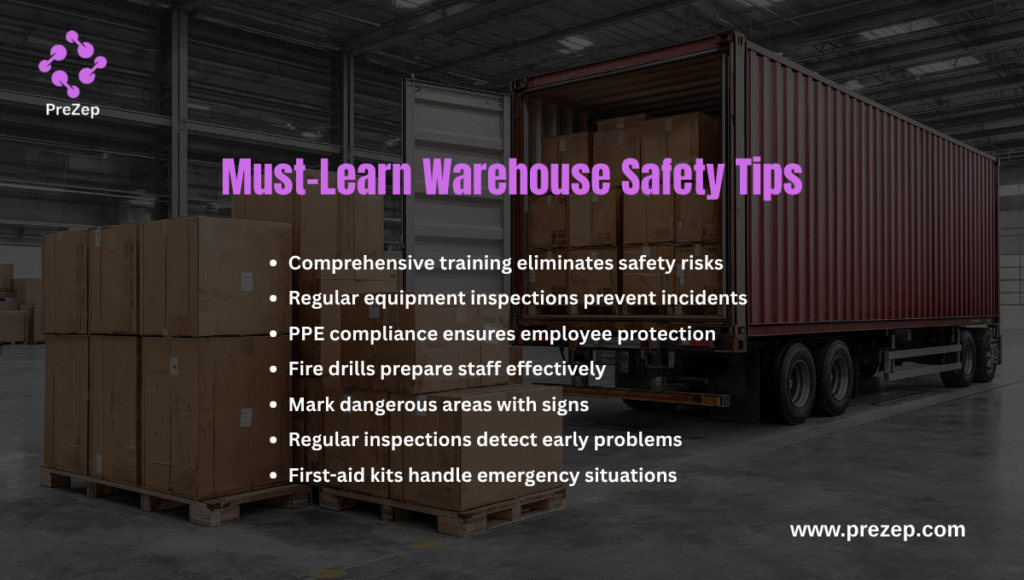
For advanced warehouse health and safety, the following tips can prove to be a game-changer. For business efficiency and employee safety.
1. Proper Training
When you offer comprehensive training programs to your workers, it can help to eliminate the issues at their roots. You have to share the risks and hazardous situations with the employees and explain how to prevent them from happening.
- Provide detailed information related to the warehouse’s layouts, safety measures, and emergency tips to new employees. It’s a lot to digest, but it can help them in dangerous situations.
- Hire people who have specialised training in handling forklift operations or manual handling safety knowledge. If you can train them properly, then they are suitable for the job. Otherwise, you risk them for a dangerous job, which is not suggested.
- Add new safety protocols and emergency measures to keep your employees’ attention on their safety.
2. Equipment Maintenance
All warehouse operations depend on their equipment. The right machines allow them to handle heavy equipment, such as forklifts, conveyor belts, and repetitive tasks. In contrast, poorly maintained equipment can lead to warehouse incidents.
- Regular inspections of the equipment, ensuring timely repair, even for minor issues. Replacing the damaged or old equipment and keeping details of the equipment maintenance are necessary.
- Training employees to handle the equipment and properly turning them off when not using is suggested.
- Incorporating safety measures with your equipment and proper maintenance of machinery is vital.
3. Compliance and Legal Aspects
When businesses run warehouses, they must not avoid safety regulations. Compliance with local regulations prevents penalties while ensuring a safe space for the employees.
- The company must ensure its employees are wearing Personal Protective Equipment (PPE). It can involve gloves, helmets, safety glasses, and other such equipment.
- Preparing for emergencies and ensuring measures which can prevent maximum physical strain for the employees can help.
- Regular auditing of safety regulations for compliance is also beneficial.
- In case of not following the legal rules, legal fines and increased insurance premiums are common.
4. Mark Dangerous Areas
When you have no signs on the restricted areas, new employees and visitors can enter the danger zones. Loading docks and chemical storage sections prove dangerous for such purposes. To avoid such situations, businesses should use bright safety signs. Floor markings and colour codes are also effective. It can help them highlight dangerous zones and emergency exits. Clear labels help avoid confusion, improve navigation, and reduce the chances of injuries.
5. Conduct a Fire Safety Drill
In emergencies, new and untrained staff can panic. They don’t know what to do and can slow down the evacuation. Conducting regular fire drills can help in familiarising employees with evacuation procedures. Also, test alarms, fire extinguishers, and emergency lights to ensure they are working. Drills help the staff to act calmly in emergencies.
6. Perform Regular Inspections
If the employees are handling multiple tasks at once, they can ignore various things in regular inspections. Faulty racks and malfunctioning equipment can cause serious damage later. Conducting a thorough warehouse racking inspection, whether it’s scheduled or a surprise, can make a difference. Test the racks, lighting, equipment, and emergency systems. When you detect problems at early stages, you can prevent massive issues.
7. Proper Medical Facility for Emergencies
Even when you ensure proper preparedness, incidents can happen at warehouses. In such situations, employees must have a first-aid kit prepared according to specific OSHA guidelines. Usually, a basic first-aid kit set must have the following things to handle difficult situations.
-
Bandages
-
Trauma pads
-
Sterile pads
-
A pair of scissors
-
Roller bandage
-
Pair exam gloves
-
Hand sanitisers
-
First aid manual
-
Eyewash
-
Eye covering
-
Cold pack
-
Burn treatment
-
Gel-soaked burn dressing
-
Breathing barrier
-
Adhesive bandages
-
Adhesive tape
-
Antibiotic treatment application
-
Antiseptic applications
Other than having first-aid supplies, ensure there are enough employees who know about implementing first aid for the injured. Prepare your employees with proper training and basic medical knowledge for difficult situations.
5 Best Warehouse Safety Practices
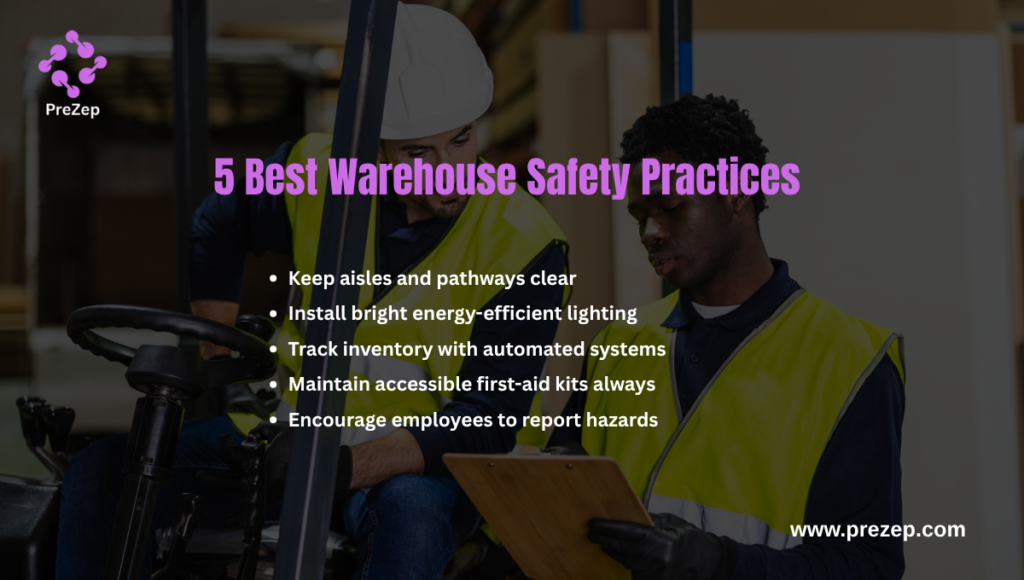
Learning about warehouse safety is necessary. But doing your best to implement simple changes can make a big difference.
- You should clear aisles and pathways. When walkways are free from unnecessary clutter, the chances of tripping and falling reduce. Ensure that in every warehouse area, everything is in the right space in an arranged manner.
- Workers cannot implement the safety training if they cannot properly see the incident occurring. You must have well-functioning and bright lights in your warehouse. You can install energy-efficient LED lights for maximum productivity and to prevent incidents.
- Using automated apps and systems to track inventory in real-time is necessary. They also have sensors to track the condition of the warehouse. It helps employees to detect any risks that can lead to troubling incidents.
- You must have at least 2 first-aid kits in your warehouse at all times. Training a few of your employees about basic first-aid procedures is also beneficial.
- Even when you are supervising and handling matters, employees work in the main fields. They know about risks and safety conditions that you are unaware of. You should encourage your employees to report any unsafe conditions and issues when they notice them. They can also suggest improvement solutions according to their experience.
Get the Best Warehouse Safety for Your Products with PreZep’s Storage Solutions!
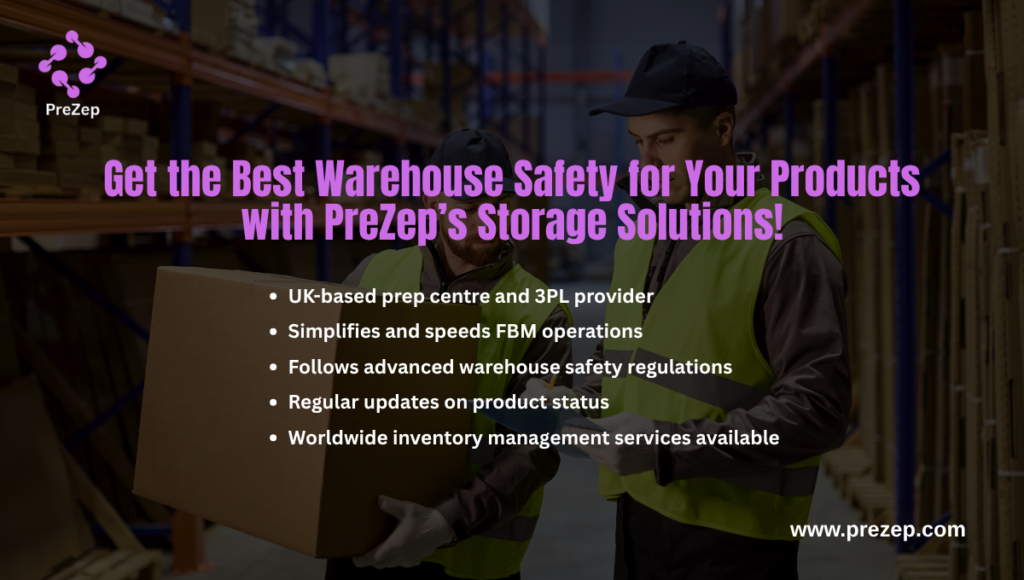
Your products deserve the best care to ensure satisfied customers. You can get such protection from PreZep. As a UK-based prep centre, 3PL warehouse, and storage partner, we simplify FBM operations for sellers.
- We offer equal treatment and services to online sellers, brands, and businesses.
- Our primary goal is to make fulfilment simple and faster under a single roof.
- You can focus on your core operations while letting us handle your inventory.
- We follow advanced regulations and tips to ensure warehouse safety.
- We also provide regular updates to ensure you know about your product’s condition and its dispatchment process.
- We offer nationwide and worldwide inventory management services for receiving, inspecting, and storing your products.
- Reach out today to get complete details about our procedures.
Conclusion
To conclude, warehouse safety is an important matter, irrespective of your business size and product type. Ensuring complete safety by following the latest regulations and providing a safe environment for your employees is necessary. Whether businesses have their own warehouses or choose 3PL providers for their storage services, investing in the best services matters. You can WhatsApp us to get further information about safety and storage solutions while getting comprehensive inventory services.
FAQs
What are some safety rules for a warehouse?
The general OSHA safety guidelines for a warehouse include various topics. Block off exposed or open loading dock doors and any areas where the staff can fall more than four feet. Also, clean aisles, surfaces, and floors from hazards that can cause accidents. Train your employees to work in different weather conditions.
Why is warehouse safety training important?
Warehouse safety training helps avoid accidents and ensure compliance with regulations. The staff can identify hazards and use dangerous equipment safely. This training improves productivity, ensures fewer accidents, and lowers insurance premiums.
What is a checklist in a warehouse?
It is a structured tool to ensure safety, cleanliness, and operational efficiency. This checklist involves aisles, racks, equipment, lighting, fire safety, ventilation, and staff training. The management can maintain a consistent work environment while reducing the chances of incidents and ensuring compliance.
 Share on WhatsApp