
Summary: Warehouse quality control is an important process that affects the entire process from preparation to delivery. Businesses have to invest in better measures and tactics to improve the overall efficiency. Customer satisfaction is dependent on how you prepare, store, and box the products. Ignoring any aspect can lead to issues. You can simplify fulfilment and warehouse tactics when your products are well-maintained. Learning the proper details about this procedure makes a difference.
_______________________________________________________________________________________________________________
A Complete Guide to Quality Control in Fulfilment Operations
Quality Audit | Barcode Scanners | Production Costs
Some businesses think it’s fine to run their warehouses as they please. But quality control is a must to ensure customer satisfaction. Comprehensive warehouse safety can affect your business’s overall procedures. Everything that happens inside your warehouse affects your operations, customer satisfaction, and your staff’s security.
It has a direct impact on the products being delivered, their delivery speed, and the customer experience. That’s why e-commerce businesses have to prioritise the quality of their products to keep everything in check. They can enhance the overall brand reputation when their product quality meets the specific customer expectations. Learning how to maintain this control is vital for better balance.
What is Quality Control?
When you run an e-commerce business, you may have heard about what QC control is. It means a procedure that involves various rules and strategies to ensure the products are handled carefully within a warehouse.
- This procedure helps businesses ensure the orders are fulfilled properly and in good condition within a specific time.
- The primary goal of quality control in manufacturing is to avoid, identify, and correct errors or defects in products.
- Mainly, this procedure is completed during the production stage. It helps prevent issues before the products enter another manufacturing stage or reach the customers. That’s why businesses conduct a series of quality checks to ensure the products are safe and usable.
Specific Components in a Quality Control Inspection
Now that you know what a quality check is, understand its components. It is a versatile procedure that involves various steps to monitor and maintain product quality in a warehouse. However, these are the most important components to complete this process.
-
Product Inspections
Every product is thoroughly examined during the production stage to ensure they meet specific quality standards for products. The products are inspected when they arrive at the warehouse regarding quantity, quality, and damage. An additional goods quality procedure is also conducted to ensure the goods being delivered are undamaged and not expired.
-
Proper Labelling
When you have a proper labelling system in your warehouse. It becomes easier for the warehouse staff to locate specific products. It reduces errors in the picking and packing procedures to smooth the overall process.
-
Professional Storage
A special component in quality control methods is to store products in such a way. This prevents any damage and maintains their quality. It can involve storing perishable products in a space with the right temperature and humidity levels. Storing fragile items with suitable protection and keeping sensitive electrical equipment away from magnetic fields, etc. Changing the overall warehouse setup and optimising the space for easy access to products without any damage is also vital.
-
Inventory Tracking and Management
To maintain proper quality control, businesses also have to rely on advanced inventory management strategies. Maintaining proper stock levels, avoiding stockouts or overstocking, and other issues are involved in such methods.
-
Checking Orders
This is a simple technique to ensure the right product is being delivered in specific quantities. It improves order accuracy and customer satisfaction while minimising returns and saving both time and money.
You can maintain better quality control and identify areas for improvement by occasionally conducting warehouse audits. It also helps improve the overall efficiency of your existing procedures.
Types of Product Quality Control
When it comes to quality control, various types are available. Learning about them helps businesses choose better methods to control the efficiency of their products.
-
Inspection
It is one of the simplest methods in quality control. The inspectors visually inspect raw materials, in-process items, and finished products. They look out for defects, inconsistencies, and deviations from specifications. Only approved products can continue to the next stage. It is a great traditional approach to find issues at early stages while ensuring only quality products reach your customers.
This method involves statistical tools to monitor and control a process. SPC proves effective for identifying variations. It happens by gathering data from different production stages. Control charts help detect these variations and highlight uncontrollable conditions. Corrective process is taken immediately if the process goes beyond specific limits. This method helps maintain consistent quality over time.
-
Automated Testing
Machines are used to conduct repetitive tests on products. These machines inspect different aspects like size, length, strength, and alignment. Consistency and accuracy become smooth with this process. If a product fails to meet the specific standards, it is flagged. This method is incredible for increasing quality control while reducing human errors.
-
Preventive Maintenance
This method ensures all machinery is in good condition. Routine checks and repairs help avoid unexpected issues. Businesses can prevent equipment failure, which otherwise can lead to further defects. Properly maintained machinery works smoothly and ensures high product quality consistently.
-
Taguchi Method
This statistical approach was designed by Japanese engineer Genichi Taguchi. This method helps improve product quality and procedures by making them robust and less sensitive. This procedure is effective, even for those products that cannot be controlled. The main goal of this method is to prevent variations and defects while improving the overall product’s quality.
Benefits of Quality Control
To maintain a balanced warehouse management system, quality control offers various benefits to businesses.
1. Better Product Quality
A prominent benefit of implementing quality control measures in a warehouse is better product quality. When you have strict quality control in place, manufacturers can detect defects at early stages. They can take corrective action before the production comes into major stages. It also helps ensure that all products meet specific standards and customer expectations.
2. Improved Customer Satisfaction
When customers purchase from your brand, they want the products to be of high-quality. When manufacturers ensure the final product meets the customers’ expectations, it helps increase customer satisfaction and loyalty. It helps improve repeat business and positive referrals for your business.
3. Decreased Production Costs
Poor-quality products lead to high production costs because of rework, testing, and scraping. When businesses implement quality control measures. They can minimise defects and production costs while improving operational efficiency in the long run.
4. Increased Brand Reputation
Businesses that consistently follow advanced quality control measures can build a positive brand reputation. Their satisfied customers use word-of-mouth to improve their branding, leading to better customer trust and loyalty.
5. Compliance with Rules and Regulations
Businesses can avoid legal issues and stay competitive by following industry rules and regulations. They can achieve these goals by implementing quality control methods. These solutions are necessary for businesses, especially in the manufacturing stages.
Quality Control vs. Quality Assurance
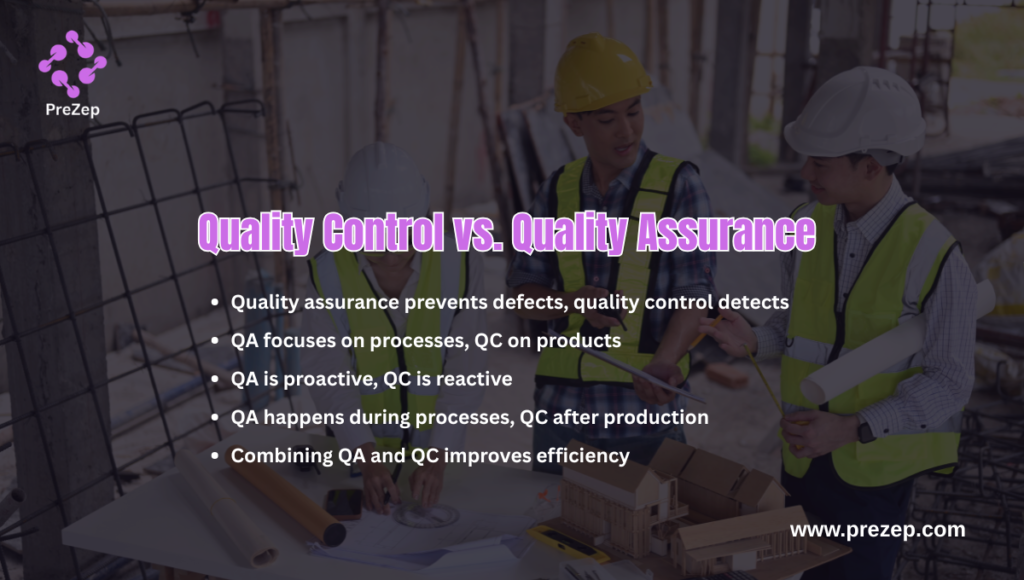
QC and quality assurance are interchangeable terms. But they have different meanings and purposes.
- QA is a proactive and process-oriented procedure. It helps build a system to prevent mistakes. On the other hand, QC is product-oriented and a reactive procedure to identify mistakes in a product.
- QA is completed before and during manufacturing procedures. On the other hand, a quality assurance process is done during or after the process.
- QA is beneficial for focusing on the entire warehouse management system. In contrast, QC handles specific batches, lots, or separate items.
But even though these procedures have differences, combining them is necessary. Using both these procedures improves the overall efficiency and smoothness in the entire manufacturing and returning procedures.
Improve Warehouse Products Quality With These Best Quality Control Procedures
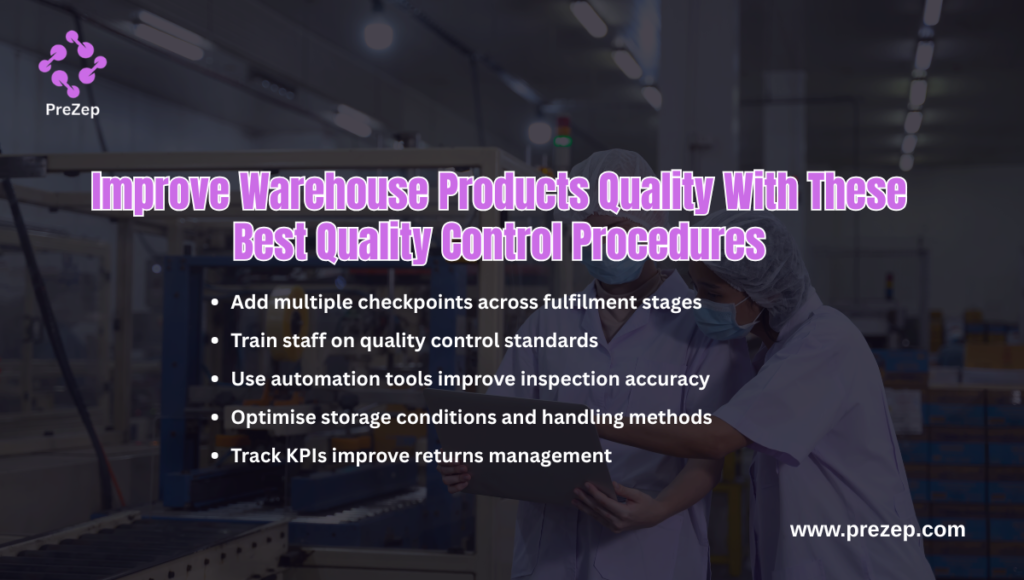
Businesses find it difficult to maintain quality control with so many aspects and procedures. Implementing the following practices helps improve the overall quality of the products.
-
Build Multiple Checkpoints Throughout the Fulfilment Process
The main issue with warehouse quality control is that things can go wrong at any stage of the manufacturing process. The staff can also get confused by picking a different product. That’s why having multiple quality checkpoints throughout the fulfilment process can help. When these checkpoints are available at different stages, the staff can easily detect issues and solve them. This process helps simplify the delivery of the products and ensures satisfied customers.
-
Advanced Staff Training on Quality Control
Usually, problems arise in the manufacturing procedures when the staff is not well-trained. When the employees don’t know what to look for or how to manage the problems. It increases the chances of further issues. That’s what makes training the employees about quality control standards necessary.
Training them about how to store and handle goods, how to use tools and equipment for inspections, etc., can help. You must have specific inspection procedures for every stage. It helps your employees follow the protocols to simplify operations and reduce errors.
-
Quality Control Automation with Technology
Various advanced automation techniques, applications, and systems are available. Businesses can use them to automate a massive part of their quality control procedures. Monitoring warehouse activities and detecting issues in KPIs becomes simpler with a warehouse management system. Using AI tools also helps in ensuring accuracy in your procedures.
-
Optimise Storage and Handling
You must store products under specific conditions, such as considering temperature, humidity, fragility level, etc. Considering proper product handling techniques also helps improve product integrity.
-
Track KPIs and Improve Reverse Logistics
Businesses should track key metrics like order accuracy rate, damage frequency, and inventory turnover. These metrics help identify specific areas for improvement. Using specific inspection procedures for returned products helps understand if they should be restocked, disposed of, or repaired.
How to Improve Product Quality Control and Assurance with Fulfilment Technology?
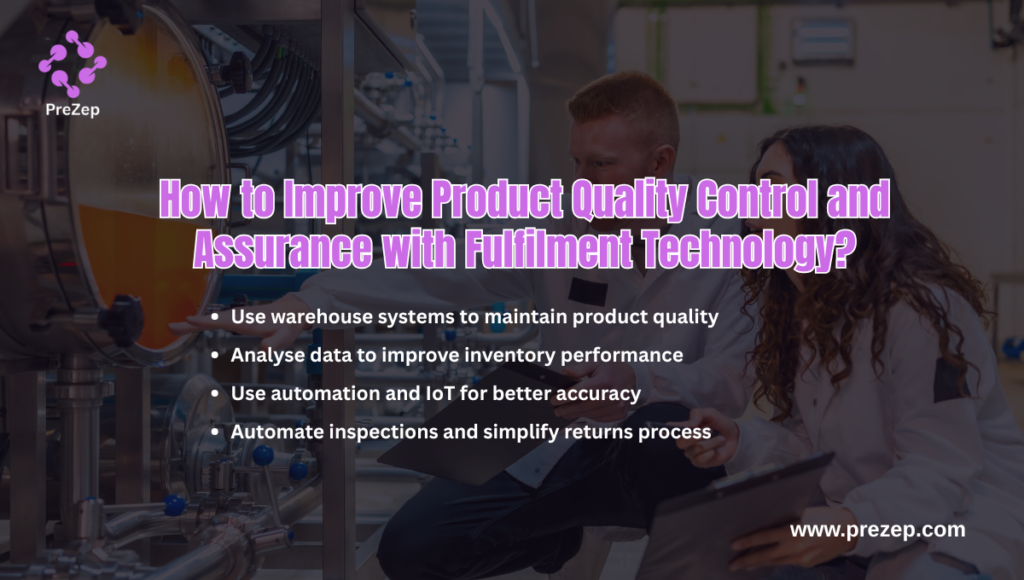
Utilising technology for improving product quality in a warehouse helps businesses enhance customer satisfaction.
- Businesses should use a warehouse management system multiple times to ensure the quality of a product throughout the fulfilment process. It helps reduce mis-picks and ensure order accuracy.
- Businesses can improve quality control when they use analytical tools to get fulfilment insights and inventory performance.
- Utilising IoT and automation techniques and systems also helps get better results.
- Automating receiving and inspection, combining QA with QC procedures, and streamlining returns and reverse logistics can also help.
Improve Customer Satisfaction with PreZep’s Quality Control Solutions
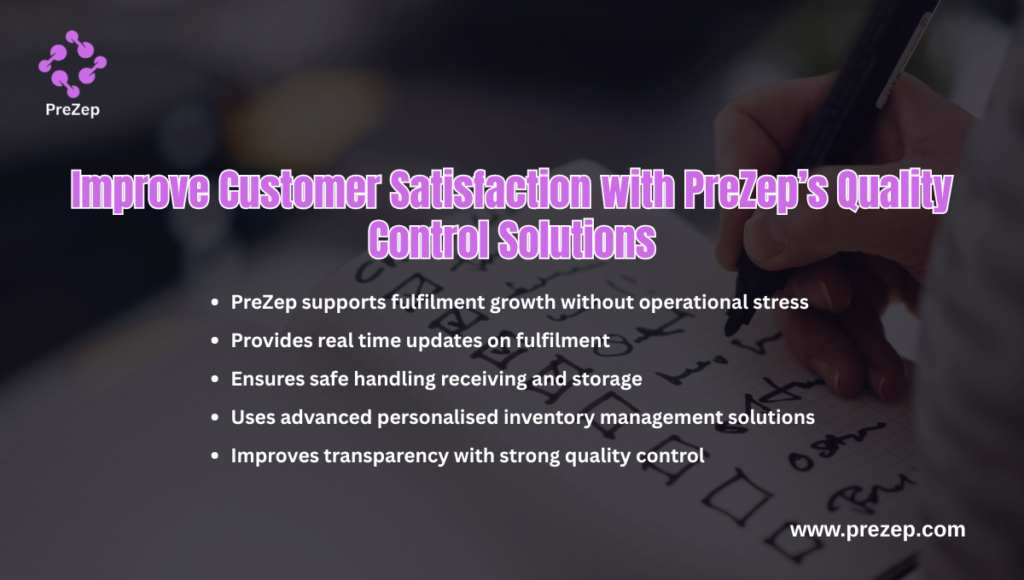
Businesses can improve their quality control procedures when they hire the right fulfilment partner. PreZep is the best option for online businesses, brands, and sellers of all sizes.
- We help businesses grow without losing focus on their primary operations.
- We provide continuous updates to ensure they are aware of what’s happening to their fulfilment procedures.
- We implement trending and personalised inventory management tips to keep your products safe during receiving, inspection, and storage.
- Make your fulfilment easier and transparent with our advanced quality control measures.
- Get further details today by contacting us.
Conclusion
To conclude, quality control in a warehouse is necessary for businesses of all sizes. It doesn’t matter if you want to improve customer satisfaction, product quality, or overall operations. Managing the quality of your products indirectly helps you to achieve all such goals. In contrast, if you avoid the quality of your products and methods in a warehouse. It can lead to the destruction of the entire series of procedures. Learning the benefits, types, and measures can help make a difference. Advance your QC today.
 Share on WhatsApp